
Most of us spend the bulk of our time indoors, at home, at work or asleep, yet we rarely think about the air in those rooms. You cannot see most of what affects indoor air quality, so it is easy to ignore until someone in the house starts sneezing, waking up stuffy or feeling foggy by mid-afternoon. Here is a practical guide to what is in the air at home, what helps, and where air conditioning fits in.
What is in the air in a typical home?
Every home is different, but the usual suspects are:
- Dust, dust mites and pet dander, which build up in carpets, bedding and soft furnishings
- Mould spores, especially where condensation is a problem
- Volatile organic compounds (VOCs) from paints, new furniture, cleaning products and air fresheners
- Carbon dioxide, which builds up in bedrooms and offices with the door and windows shut
- Pollen and traffic pollution that come in from outside
- Moisture from cooking, showers and drying washing indoors
Why it matters
Poor indoor air is linked to irritation of the eyes, nose and throat, and it can make existing conditions such as asthma and allergies harder to manage. Stuffy, high-CO2 rooms are commonly associated with tiredness and poor concentration. Children, older people and anyone with a respiratory condition tend to feel the effects most. If you have health concerns, your GP or the NHS website is the place to start: this article is about the building, not medical advice.
Start with the basics
Before spending money on equipment, these simple steps make a real difference in most homes:
- Ventilate little and often. Use trickle vents and extractor fans, and open windows for short bursts when pollen and traffic are low.
- Deal with moisture at source. Lids on pans, the extractor on while cooking and showering, and dry washing outside or near ventilation where possible.
- Tackle mould early. Persistent condensation usually points to a ventilation, insulation or heating issue worth fixing.
- Cut back on sprays and fragrances. Many add VOCs to the air.
- Keep heating steady. Very cold rooms encourage condensation. A well-maintained heating system helps.
What about air conditioning?
It is fair to say that a standard air conditioning system is not an air purifier. Its main job is to move heat. But it does affect the air in a room in a few useful ways.
Filters catch dust
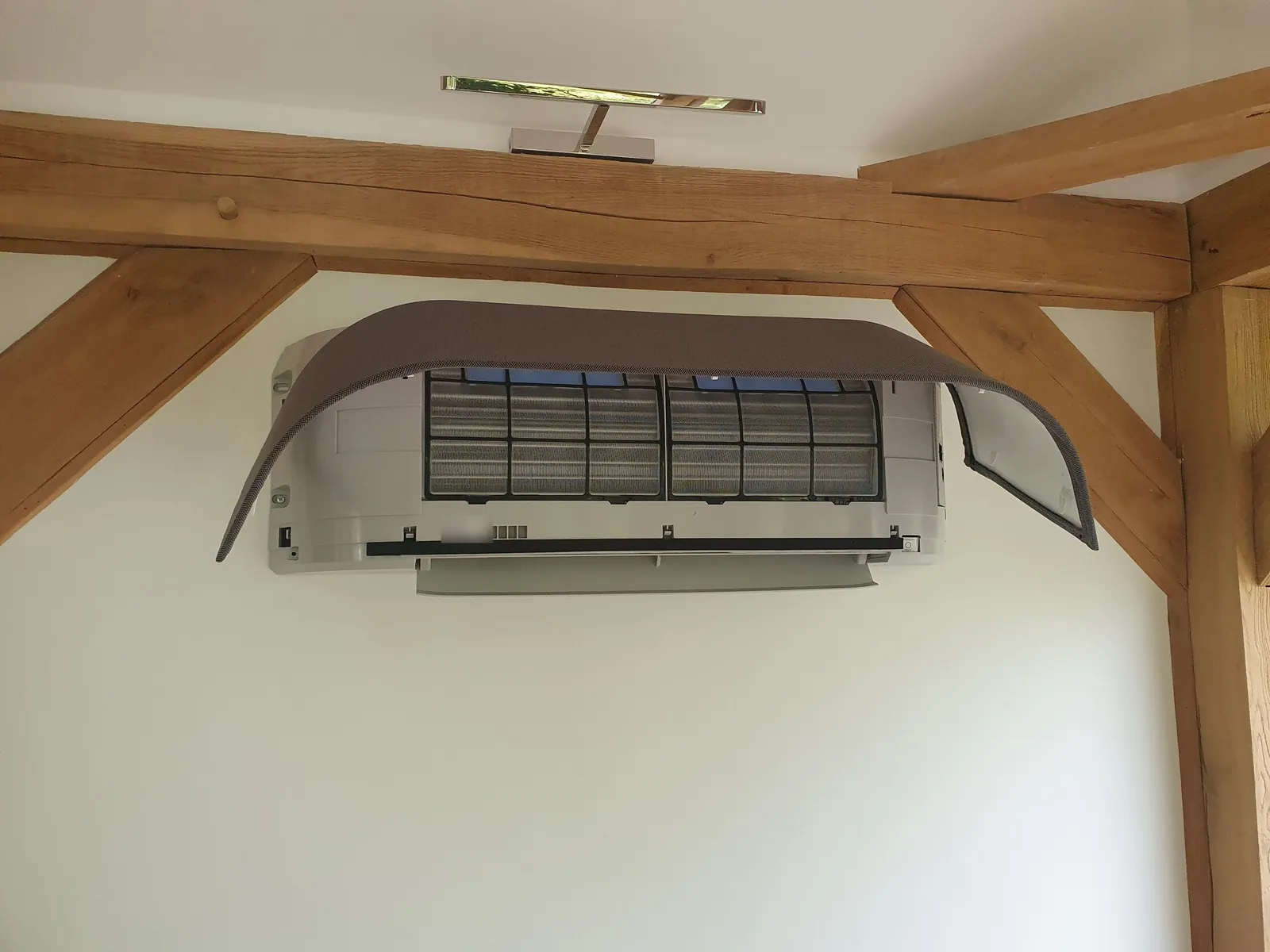
Air passes through filters on its way through the indoor unit, which catches some dust and fibres. Those filters only help if they are cleaned. A blocked filter reduces airflow and efficiency, so ask us to show you how to clean them at handover.
Cooling also removes moisture
When air conditioning cools a room, moisture condenses on the cold coil and drains away. In muggy weather, that drier air feels more comfortable and can help sleep.
Windows can stay shut
In a heatwave, the usual answer is to throw the windows open. That also lets in pollen, traffic fumes and noise. A cool room with the window closed can be much better for hay fever sufferers at night.
But a dirty system makes things worse
An indoor unit that has not been cleaned for years can harbour dust, debris and mould in the coil, fan and drain tray, and blow it back into the room. Regular cleaning is not optional if you care about air quality.
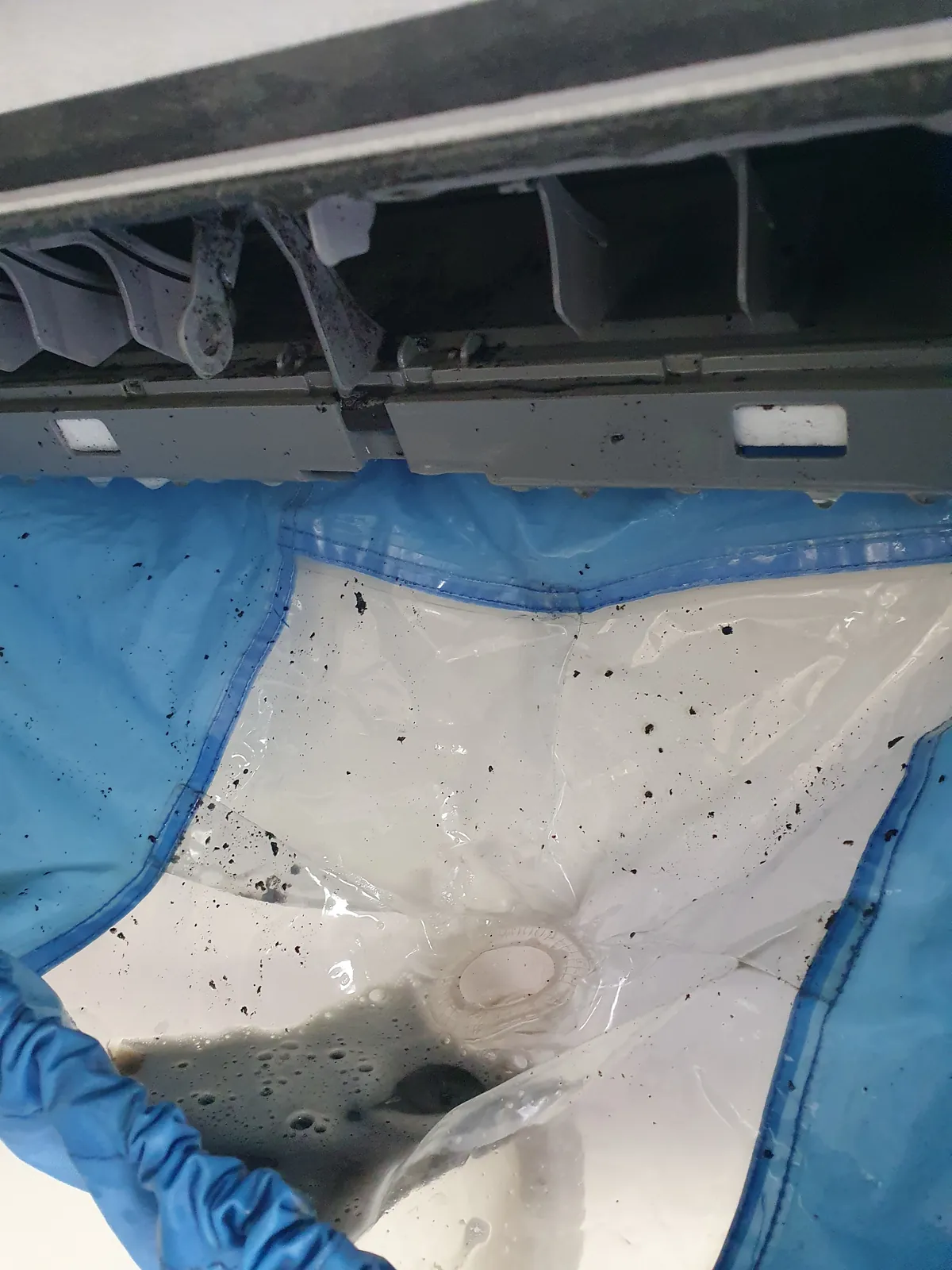
We offer an antibacterial deep clean and sanitise for indoor units, priced per unit on our prices page. See also our air conditioning servicing page.
Built-in air quality options on ducted systems
If you are planning a ducted system, some zoning controls can add air quality monitoring. Airzone, for example, describes an AirQ sensor that measures things like CO2, particulates (PM2.5 and PM10), VOCs and humidity in a zone, with readings you can view in the Airzone Cloud app. On some of its systems, Airzone says ionisers fitted to the motorised dampers or grilles switch on when the sensors detect poor air, and the sensor can also trigger connected ventilation equipment.
These are manufacturer features and vary by system and options, so treat them as something to explore rather than a promise. We can design ducted systems with zoning and talk you through which air quality features are available for your layout. Our guide to how Airzone zoning works explains the zoning side.
A sensible plan for better air at home
- Sort the basics: ventilation, moisture and mould.
- If summer heat is the problem, consider air conditioning so windows can stay shut on high-pollen days and nights.
- Choose a system with filters that are easy to reach, and clean them regularly.
- Book regular servicing and a deep clean so the system stays hygienic.
- For ducted systems, ask about air quality sensors and zoning when you plan the design.
You can read about our air conditioning installation service, look at air conditioning case studies, or get a free quote.
Questions we get asked
Does air conditioning clean the air?
Not in the way a dedicated purifier does. Its filters catch some dust, and cooling removes moisture, but its main job is to move heat. Some ducted systems can add air quality sensors and purification features.
Can air conditioning make allergies worse?
A dirty, unserviced unit can. A clean, well-maintained one, with filters looked after, lets you keep windows shut during high pollen, which many hay fever sufferers find helpful.
How often should the filters be cleaned?
It depends on the room and how much the system runs. Check them regularly, more often in rooms with pets or lots of dust, and follow the manufacturer’s guidance. Ask us to show you at handover.
Do you fit air quality sensors?
On ducted systems with zoning, we can talk you through the air quality options available for your system and include them in the design if they suit you.
Ready when you are
Tell us what you need and we will come back to you with a clear, fixed price. No pressure, no hard sell.
Ready when you are
Tell us what you need and we will come back to you with a clear, fixed price. No pressure, no hard sell.