
The most common complaint about whole-house heating and cooling is always the same: one person is too hot, and another is too cold. A ducted air conditioning system with a single thermostat has the same problem, because every room gets the same treatment. Zoning fixes that by giving rooms their own temperature settings. Here is how Airzone zoning works, and when it is worth having.
The problem with one thermostat
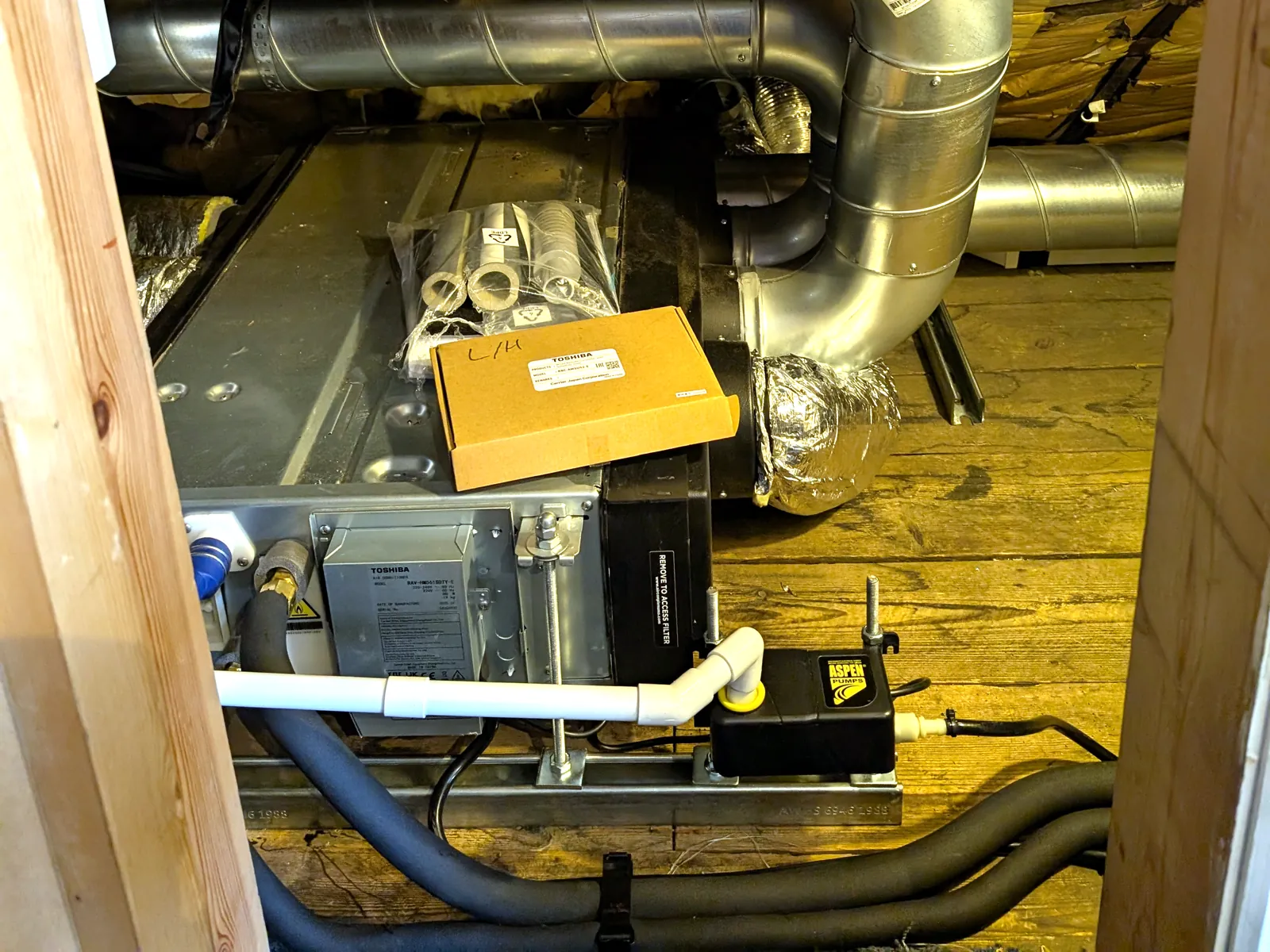
A standard ducted system has one indoor unit, usually hidden in the loft or a ceiling void, feeding several rooms through ductwork. Without zoning, it is controlled from one place. That leads to familiar compromises:
- the bedroom on the sunny side is too warm while the one on the shady side is cold
- you pay to cool or heat rooms nobody is using
- whoever is nearest the controller wins
What is Airzone?
Airzone is a manufacturer of control systems for air conditioning. Its zoning systems connect to a ducted indoor unit and divide the house into zones, usually one per room. Each zone has:
- a thermostat in the room, wired or wireless depending on the system
- a motorised damper in the ductwork, or a motorised plenum at the unit, that opens and closes to control the airflow to that room
The Airzone controller reads all the thermostats, opens and closes the dampers, and tells the air conditioning unit how hard it needs to work based on how many zones are calling for heating or cooling.
How it works in practice
Picture a summer evening:
- the main bedroom is set to 19°C ready for bed
- the living room is set to 22°C while you watch television
- the spare room and study are switched off, so their dampers close
The system only delivers air where it is needed. Not cooling or heating empty rooms means the system can run more gently, which helps efficiency and keeps noise down. How much energy you save depends on the house and how you use it, so we will not put a number on it.
Control from the app, the wall or your voice
Depending on the system and the options chosen, Airzone says its systems can be controlled:
- from the thermostats in each room
- from the Airzone Cloud app on Android and iOS, at home or away
- by voice through Amazon Alexa and Google Assistant, via Airzone’s web server connection
You can set schedules for each zone, such as warming the bathroom and bedrooms before you get up, without running the whole house. Our guide to smart air conditioning control covers the app and voice side in more detail.
Air quality options
Some Airzone systems add air quality features. Airzone describes an AirQ sensor that measures CO2, particulates, VOCs and humidity, and on some systems ionisers fitted to the dampers or grilles that switch on when the sensors detect poor air. These are optional and vary by product. If air quality matters to you, read our guide to indoor air quality at home and ask us what is available for your layout.
Designing a zoned system properly
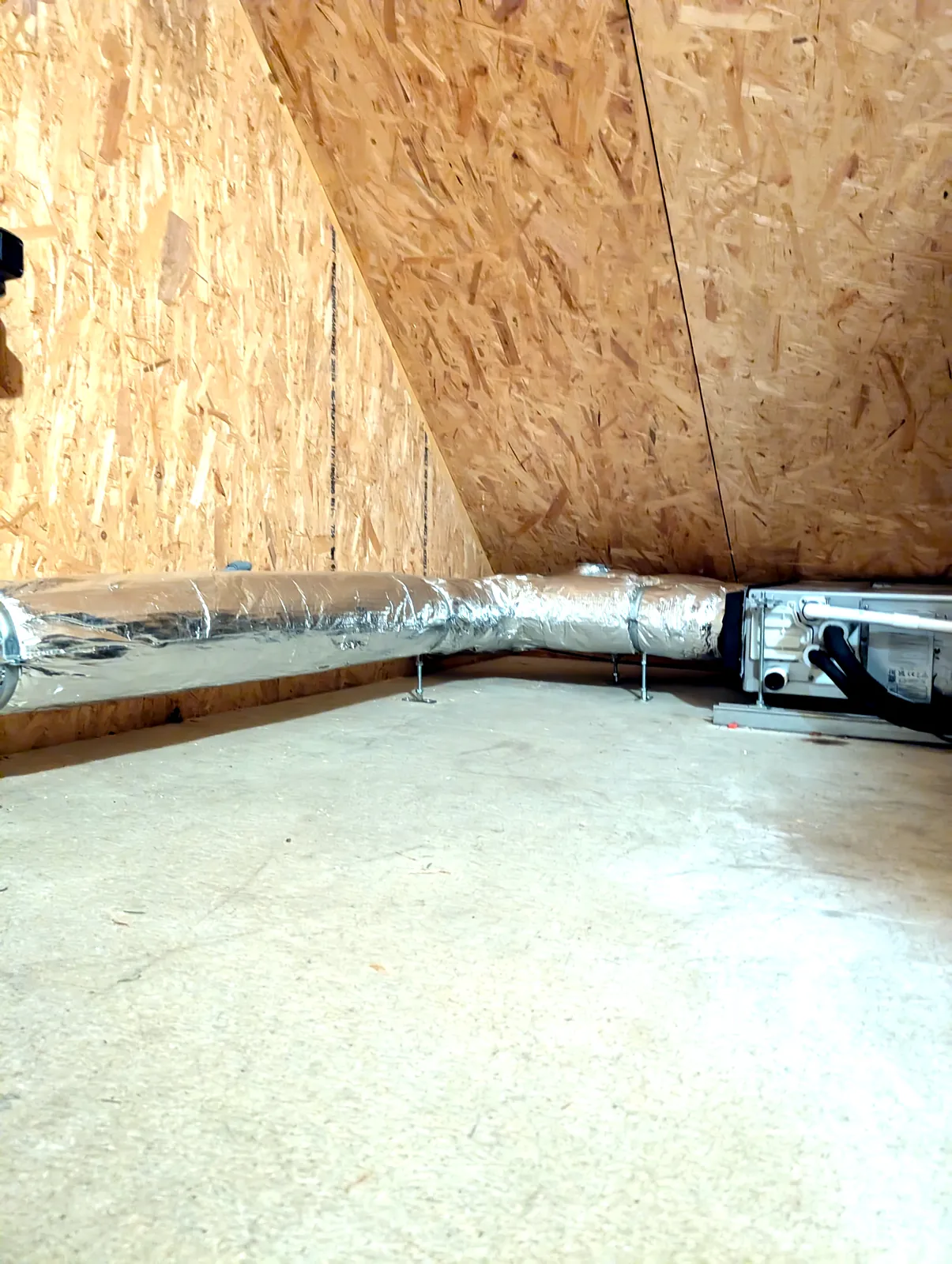
Zoning is only as good as the ductwork behind it. A zoned system needs:
- an indoor unit sized for the house, with the right fan capacity for the duct runs
- ducts sized for each room and well supported, so they do not sag or restrict airflow
- insulated ductwork in unheated lofts, so you do not lose cooling or get condensation
- grilles positioned so air reaches the room without blowing on anyone
- a plan for what happens when only one small zone is calling
We can design ducted systems with zoning, including Airzone, and we plan the duct routes and grille positions with you before anything is fitted.
Who is zoning best for?
- Families who like different temperatures in different rooms
- Homes with rooms on different sides of the house that heat up at different times of day
- People renovating, who want hidden air conditioning with room-by-room control
- Anyone who wants to stop heating or cooling rooms they do not use
Zoning is less useful if you only need one or two rooms cooled. In that case, a wall-mounted or multi-split system, where each indoor unit already has its own controller, is usually simpler and cheaper. Our guide to hidden vs wall-mounted air conditioning compares the options.
Talk to us about zoning
If you are planning ducted air conditioning, ask us about zoning at your survey and we will show you how it could work in your home. Read about our air conditioning installation service, see our air conditioning case studies, check our prices, or get a free quote.
Questions we get asked
Can Airzone be added to any air conditioning system?
Zoning is designed for ducted systems, where one indoor unit feeds several rooms through ductwork. Wall-mounted units already have their own individual controls.
Can I add zoning to an existing ducted system?
Often, yes, but it depends on the indoor unit, the ductwork layout and access. We would need to survey it.
Does zoning save energy?
Not heating or cooling empty rooms means the system does less work. The saving depends on your house and how you use it, so we do not quote a fixed percentage.
Can I control it with Alexa or Google?
Airzone says its systems can work with Amazon Alexa and Google Assistant through its web server connection. We will confirm what your chosen system supports.
Ready when you are
Tell us what you need and we will come back to you with a clear, fixed price. No pressure, no hard sell.
Ready when you are
Tell us what you need and we will come back to you with a clear, fixed price. No pressure, no hard sell.